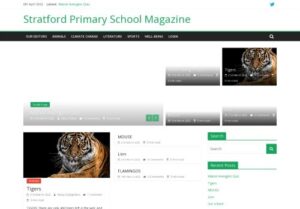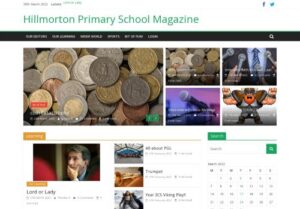
It is essential that you publish pupils writing giving to give them “a reason to write and someone to write for.”
Would you like to see what this could look like?

“Pupils enjoy writing for family and friends more than for schoolwork.”
Young People’s Writing: Attitudes, Behaviour and the Role of Technology – Clark and Dugdale
OFSTED criteria that could be met using a School Magazine
Whilst we don’t lead a school based around OFSTED criteria, there is no escaping the fact that we need to evidence the points in the inspection framework. These are some areas that I believe can be evidenced through your school magazine. Of course, this will depend on how you would like to implement your magazine and the subjects that you write about but this hopefully demonstrates some of the additional benefits.
- Overall Effectiveness
- Leadership and Management
- Teaching, Learning and Assessment
- Personal Development, Behaviour and Welfare
- Outcomes for Pupils
147 – Spiritual development:
- sense of enjoyment and fascination in learning about themselves, others and the world around them
- willingness to reflect on their experiences
148 – Moral Development:
- interest in investigating and offering reasoned views about moral and ethical issues and ability to understand and appreciate the viewpoints of others on these issues.
149 – Social Development:
- use of a range of social skills in different contexts
- willingness to participate in a variety of communities and social settings
150 – Cultural Development:
- understanding and appreciation of the range of different cultures within school and further afield
- knowledge of Britain’s democratic parliamentary system and its central role in shaping our history and values
- interest in exploring, improving understanding of and showing respect for different faiths
Outstanding Criteria
- The school’s thoughtful and wide-ranging promotion of pupils’ spiritual, moral, social
- and cultural development and their physical well-being enables pupils to thrive
152:
- the design, implementation and evaluation of the curriculum, ensuring breadth and balance and its impact on pupils’ outcomes and their personal, development, behaviour and welfare
- how well the school supports the formal curriculum with extra-curricular opportunities
- how well the school prepares pupils positively for life in modern Britain and promotes the fundamental British values
- how well leaders and governors engage with parents and other stakeholders and agencies to support all pupils
- how well leaders and governors promote all forms of equality and foster greater understanding of and respect for people of all faiths
- the effectiveness of leaders’ and governors’ work to raise awareness and keep pupils safe
Outstanding Criteria:
- The broad and balanced curriculum inspires pupils to learn. The range of subjects and courses helps pupils acquire knowledge, understanding and skills in all aspects of their education, including the humanities and linguistic, mathematical, scientific, technical, social, physical and artistic learning.
- Pupils’ spiritual, moral, social and cultural development and, within this, the promotion of fundamental British values, are at the heart of the school’s work
- Leaders promote equality of opportunity and diversity exceptionally well, for pupils and staff, so that the ethos and culture of the whole school prevents any form of direct or indirect discriminatory behaviour.
167:
- teachers and other staff have consistently high expectations of what each pupil can achieve
- equality of opportunity and recognition of diversity are promoted through teaching and learning
- English, mathematics and the skills necessary to function as an economically active member of British society are promoted through teaching and learning
169:
- pupils’ views about the work they have undertaken, what they have learned from it and their experience of teaching and learning over time
- pupils’ effort and success in completing their work, both in and outside lessons, so that they can progress and enjoy learning across the curriculum
170:
- assessment draws on a range of evidence of what pupils know, understand and can do across the curriculum
172:
- Inspectors will consider the impact of the teaching of literacy on outcomes across the curriculum
Outstanding Criteria:
- Teachers embed reading, writing and communication and, where appropriate, mathematics exceptionally well across the curriculum, equipping all pupils with the necessary skills to make progress.
- They encourage pupils to try hard, recognise their efforts and ensure that pupils take pride in all aspects of their work.
- They are curious, interested learners who seek out and use new information to develop, consolidate and deepen their knowledge, understanding and skills. They thrive in lessons and also regularly take up opportunities to learn through extra-curricular activities.
- Resources and teaching strategies reflect and value the diversity of pupils’ experiences and provide pupils with a comprehensive understanding of people and communities beyond their immediate experience.
Oustanding criteria:
- Pupils discuss and debate issues in a considered way, showing respect for others’ ideas and points of view.
- Pupils can explain accurately and confidently how to keep themselves healthy. They make informed choices about healthy eating, fitness and their emotional and mental well-being.
- Pupils have an excellent understanding of how to stay safe online and of the dangers of inappropriate use of mobile technology and social networking sites.
- Pupils’ spiritual, moral, social and cultural development equips them to be thoughtful, caring and active citizens in school and in wider society.
191:
- pupils are gaining and consolidating knowledge, understanding and skills
- pupils do work that deepens their knowledge, understanding and skills
193:
- For current pupils, inspectors will consider the impact of what a school is doing to reduce any differences in progress and attainment between disadvantaged and other pupils with the same starting points
Outstanding Criteria:
- Pupils are typically able to articulate their knowledge and understanding clearly in an age-appropriate way